
Want to work as an engineer in Japan but unsure which tech stacks companies actually use? This article covers the most popular tech stacks, everyday tools, unique deployment practices, project management, IT communities, and certifications that can boost your career -- all based on firsthand experience working at Japanese IT companies.
This guide is written for international developers and engineers who want to understand the technology landscape in Japan before applying for jobs or after relocating there.
Backend: PHP/Laravel + PostgreSQL
PHP/Laravel is one of the most popular tech stacks in Japan, especially at mid-sized and large companies. Why is it so dominant? There are several reasons:
- Mature ecosystem -- documentation is available in Japanese, making it easy for both local and foreign team members to collaborate
- Gentle learning curve -- onboarding new engineers can be done quickly, which is important for companies that frequently rotate projects
- LTS (Long-Term Support) -- predictable updates and high stability, aligned with Japan's culture of prioritizing reliability
- Migration from CakePHP to Laravel -- this trend is happening on a massive scale across many companies, opening up job opportunities for Laravel developers
For databases, PostgreSQL is very popular due to its strong performance, robust JSON support, and of course -- it's free. This makes it an attractive alternative to Oracle, which is still widely used in large enterprises but comes with high licensing costs.
Legacy Systems: VB.NET Is Still Alive
Don't be surprised -- VB.NET is still very widely used in Japan, even at large companies and government agencies. This is a reality rarely discussed outside Japan, but it's important to understand:
- Mature codebase -- many systems have been running for decades, with documentation that is sometimes minimal or only available in internal Japanese
- No unit tests -- in many legacy projects, testing is done manually following 手順書 (teshunjyo -- step-by-step procedure manuals)
- Variable names in Japanese -- yes, you will encounter variables like
合計金額(total amount),部屋番号(room number), and利用時間(usage time) - Migration to modern technologies -- this is underway at many companies, creating great opportunities for engineers who can bridge legacy and modern systems
Infrastructure: AWS Dominance
AWS holds approximately 30-40% of the cloud market in Japan, making it the most dominant cloud platform. Here are the most commonly used AWS services at Japanese IT companies:
| Service | Function |
|---|---|
| EC2 / ECS | Primary servers for running applications (VMs and containers) |
| RDS | Managed PostgreSQL and MySQL -- reduces operational burden on DBAs |
| S3 | File storage, images, backups, and static assets |
| CloudWatch | Monitoring, alerting, and log aggregation |
| ELB | Load balancer for distributing traffic across multiple servers |
| Route 53 | DNS management and routing |
It's important to note that many Japanese companies use AWS Tokyo region (ap-northeast-1) as their default, and some enterprise companies still use on-premise or hybrid cloud setups.
Manual Deployment -- Still Common
This may surprise developers accustomed to CI/CD: many Japanese companies still deploy manually. The process is highly structured and follows strict patterns:
The team creates a 手順書 (teshunjyo -- step-by-step deployment manual) in great detail. Every step is documented, including commands to run, files to check, and the rollback plan. The staging environment is thoroughly re-verified.
Deployment is done to a subset of branches first -- for example, 5-10 out of 300+ branches. This is usually carried out during 早朝展開 (souchou tenkai -- early morning deployment, around 4-6 AM) to minimize impact on users.
After the pilot branches prove stable over several days, deployment is then rolled out to all branches. The principle: better slow and safe.

Everyday Tools for Engineers in Japan
Here are the tools you'll frequently use as an engineer at a Japanese IT company:
Interestingly, A5:SQL Mk-2 is a tool virtually unknown outside Japan, but very popular among Japanese engineers. It's a free database client built by a Japanese developer that supports various database engines.
Project Management
The way Japanese companies manage projects also has unique characteristics:
Primary Tools
- Backlog -- built by Nulab (a Japanese company), this is the most popular project management tool in Japan. Similar to Jira but simpler with a cleaner UI. Supports Git hosting, wiki, and Gantt charts
- Redmine -- also still very popular, especially at companies that have been using it for years
- Microsoft Teams -- the primary communication platform at many Japanese companies
- Slack / ChatWork -- alternative communication tools at other companies. ChatWork is a Japanese product that is quite popular domestically
Common Git Flow
Most companies follow a standard Git flow with this pattern:
main → develop → feature branch (per Backlog ticket)
Branch naming usually follows a structured convention such as:
develop_BACKLOG_PROJECT-1234_feature_name
Each branch is tied to a ticket in Backlog or Redmine, ensuring clear traceability from requirement all the way to code.
IT Communities & Meetups in Japan
One of the best things about working in Japan is the active and welcoming IT community. Here are the communities and events you should know about:
| Community / Event | Description |
|---|---|
| Laravel JP Conference | The largest Laravel conference in Japan. Usually held annually with both local and international speakers |
| PHP Conference Japan | An annual event for the Japanese PHP community. A great place for networking and learning from senior engineers |
| JAWS-UG | Japan AWS User Group -- has chapters in various cities (Tokyo, Osaka, Nagoya, etc.). Regular meetups and hands-on workshops |
| Connpass | The main platform for finding and registering for IT meetups in Japan. A must-have account if you want to attend events |
| 勉強会 (Benkyoukai) | Study groups -- a unique Japanese tradition. Previously offline in Tokyo/Osaka, now many are hybrid (online + offline) |
勉強会 (benkyoukai) is a distinctly Japanese concept -- engineers gather after work hours or on weekends to learn new technologies together. Topics range from Kubernetes to machine learning. It's also a great way to expand your professional network and improve your technical Japanese.

Valued Certifications
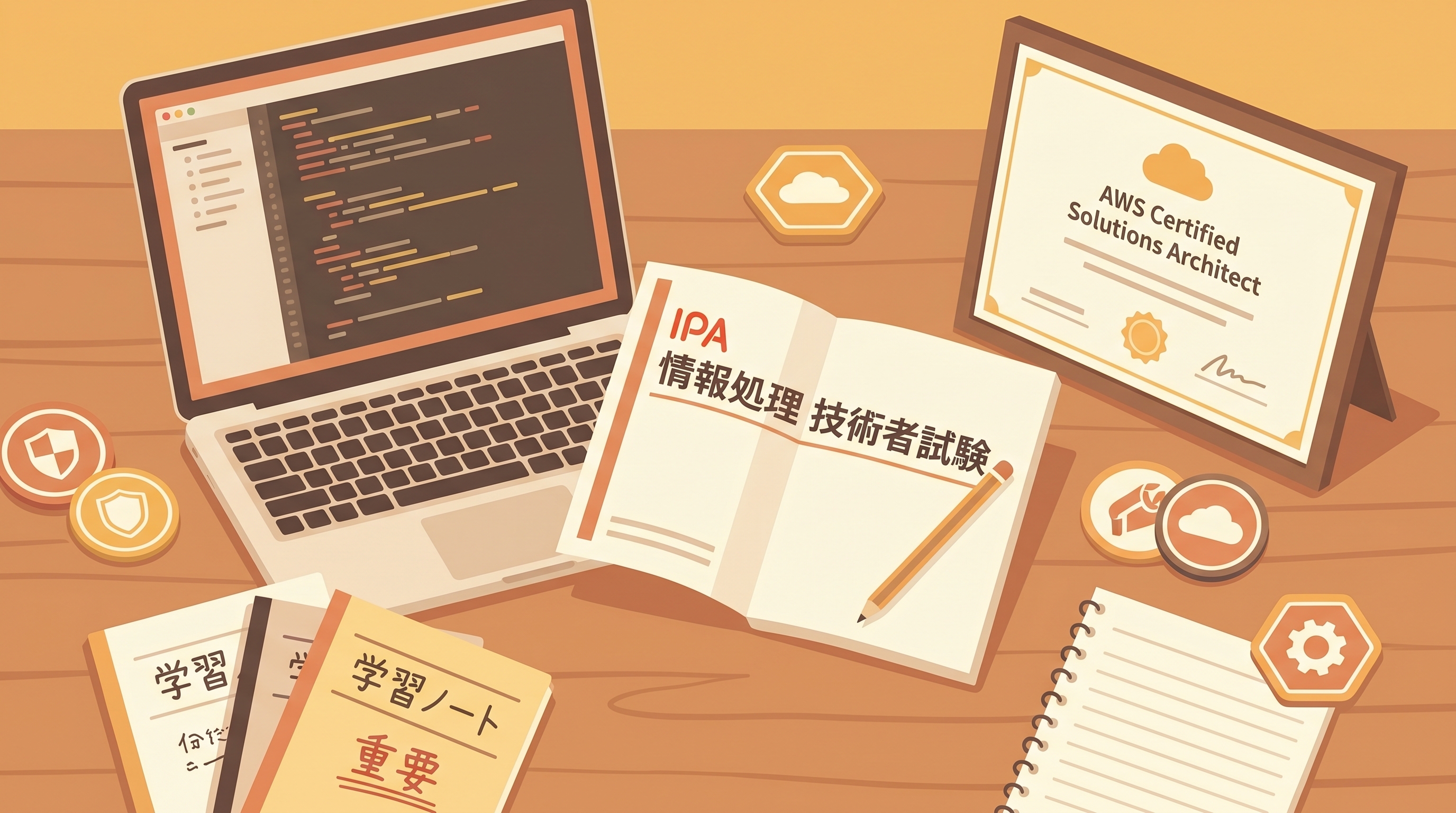
Japanese companies highly value certifications -- unlike many other countries where certifications are sometimes considered a formality. In Japan, many companies offer bonuses or automatic salary increases when employees earn certain certifications:
| Certification | Level & Details |
|---|---|
| IPA 基本情報技術者 (FE) | Baseline -- the foundational IT certification from IPA. Required for many entry-level positions. The exam is available in English |
| IPA 応用情報技術者 (AP) | Advanced level -- immediately boosts credibility. Many companies offer bonuses of ¥50,000-100,000 for AP holders |
| AWS Solutions Architect | Highly sought after -- especially Associate and Professional levels. Highly relevant given AWS dominance in the Japanese market |
| Oracle Database | High value in enterprise -- many large companies still use Oracle as their primary database |
Conclusion
The technology landscape in Japan may look unique compared to Silicon Valley or the Southeast Asian startup ecosystem. PHP/Laravel dominates backend development, VB.NET lives on in legacy systems, AWS is the primary cloud platform, and deployments can be done manually with 手順書. But this is precisely where the opportunity lies -- engineers who understand this context and can bridge the gap between modern and legacy systems are in high demand.
Next, learn about work culture at Japanese companies, how engineer career progression works, and what IT engineer salaries in Japan look like for a more complete picture.
Take advantage of communities like JAWS-UG, Connpass, and 勉強会 to build your network. And don't forget -- certifications like IPA FE/AP and AWS Solutions Architect can be a significant differentiator on your resume.
This article is based on the firsthand experience of Vetra Aprilia as a backend engineer in Osaka and was last updated in June 2026. The tech stacks and tools mentioned may vary depending on the company and industry.
Comments
0 comments